



Your First Kilt Commission: Questions for Our Tailors
From choosing the right tartan to understanding the finer points of Highland dress, we answer some of the questions most frequently asked by those commissioning their first bespoke kilt.
There are few garments quite as personal as a kilt. Whether commissioned for a wedding, a formal occasion or simply to establish a proper Highland wardrobe, a well-made kilt is something that should last a lifetime.
At Campbell’s of Beauly, Highland tailoring has been at the heart of our business since 1858. Over the generations, we have helped countless customers commission their first kilt, and while the process may initially seem daunting, it is considerably more enjoyable than you might imagine.
The important thing is to take your time, ask questions and choose something that feels right for you.
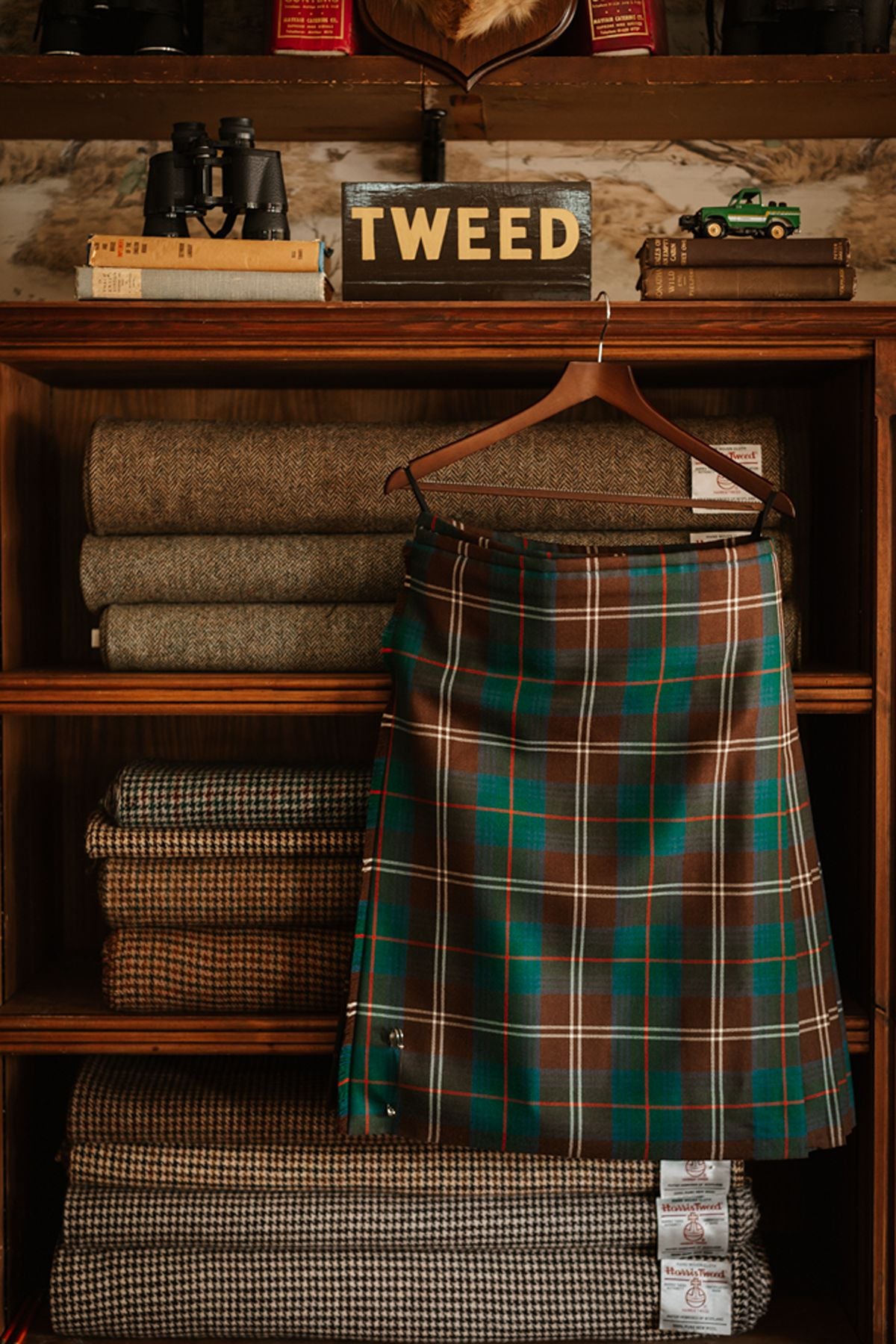
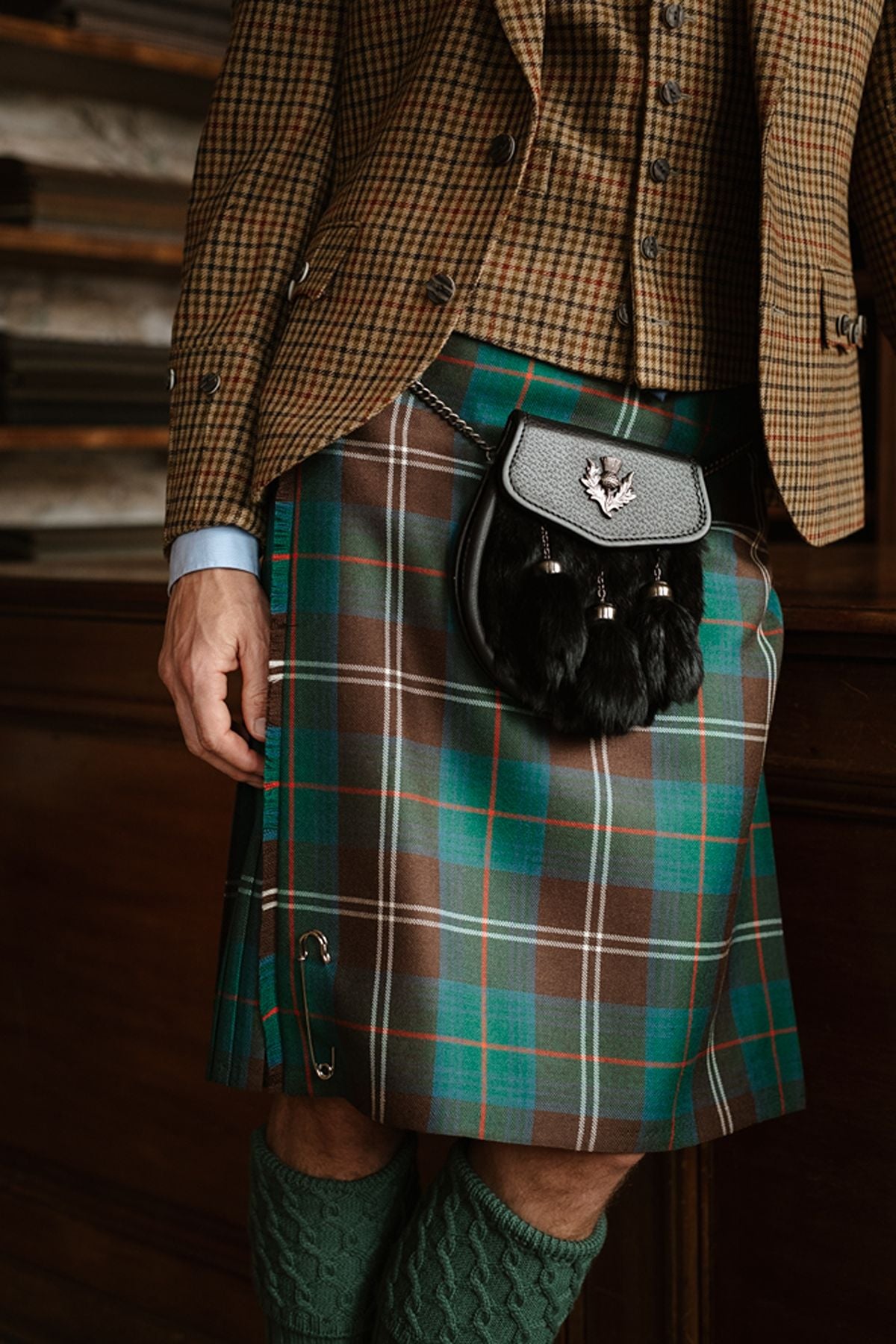
Which Tartan Should I Choose?
This is usually the first question, and perhaps the most enjoyable.
For those with Scottish ancestry, a family or clan tartan is often the natural starting point. Many clans have several recognised variations, including ancient, modern, hunting and weathered colourways.
However, there is no requirement to wear a tartan associated with your surname. District tartans and other established designs offer plenty of alternatives.
For those without a particular family connection, we recommend choosing a tartan whose colours and character you genuinely like. After all, you may be wearing it for decades.
Our team is always happy to guide customers through the options.
How Much Cloth Does a Kilt Require?
A traditional gentleman’s kilt generally requires around eight yards of cloth, although the precise quantity depends on the wearer's measurements, the width of the fabric and the size of the tartan sett.
Much of this material is concealed within the pleats at the back, giving the kilt its distinctive movement and shape.
Traditional kilts are commonly made from worsted wool tartan, with heavier cloths offering a particularly satisfying drape.
Our tailors can advise on the most suitable weight and quantity for your commission.
What Is the Difference Between Pleating to the Sett and Pleating to the Stripe?
One of the finer decisions involved in commissioning a kilt concerns the arrangement of the pleats.
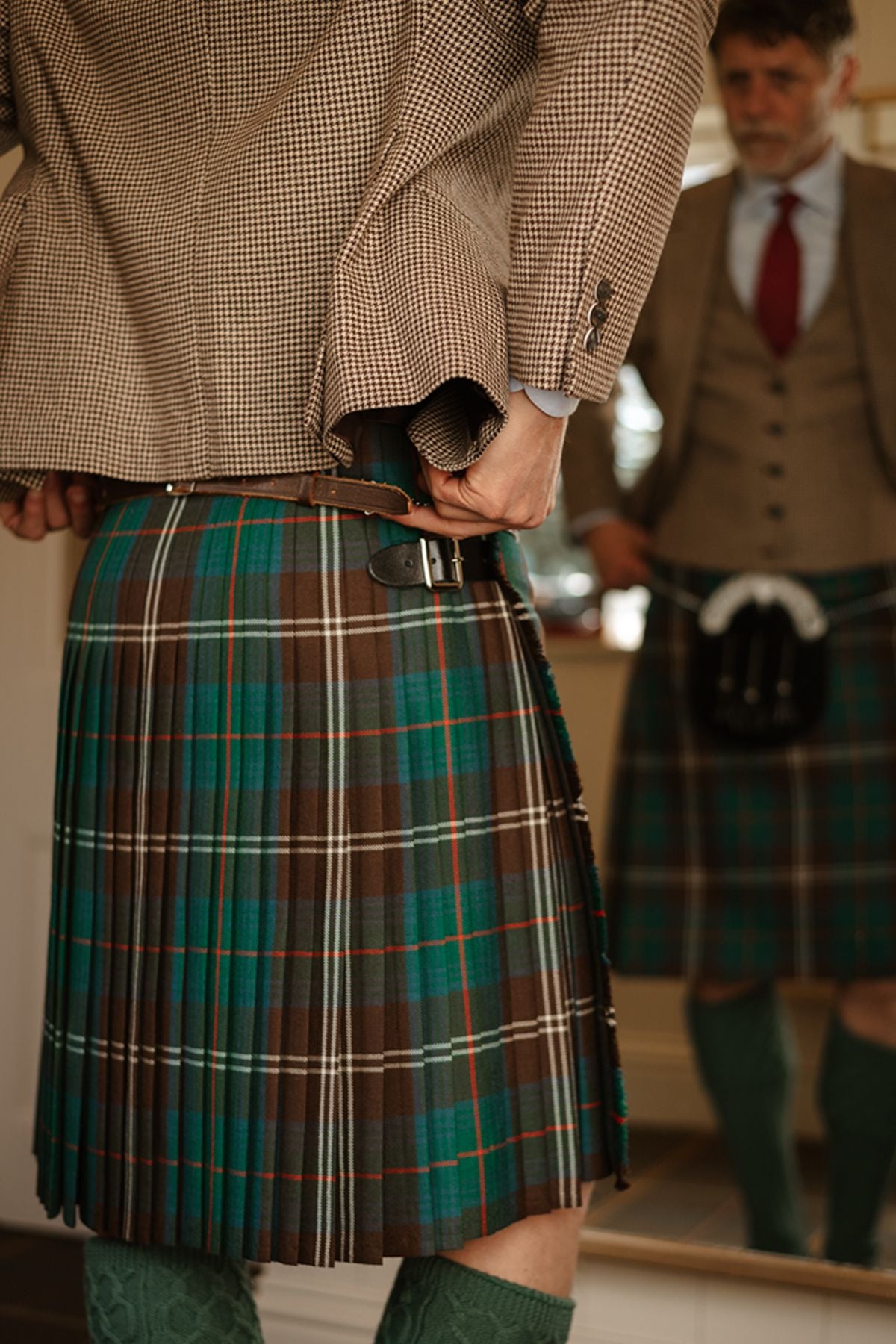
Pleating to the sett means arranging the pleats so that the tartan pattern is broadly repeated across the back, echoing the appearance of the flat aprons at the front.
Pleating to the stripe emphasises a particular vertical stripe within the tartan, producing a more regular, striped appearance across the pleated section.
Both methods are traditional, and the choice often comes down to personal preference and the character of the tartan.
How Should a Kilt Fit?
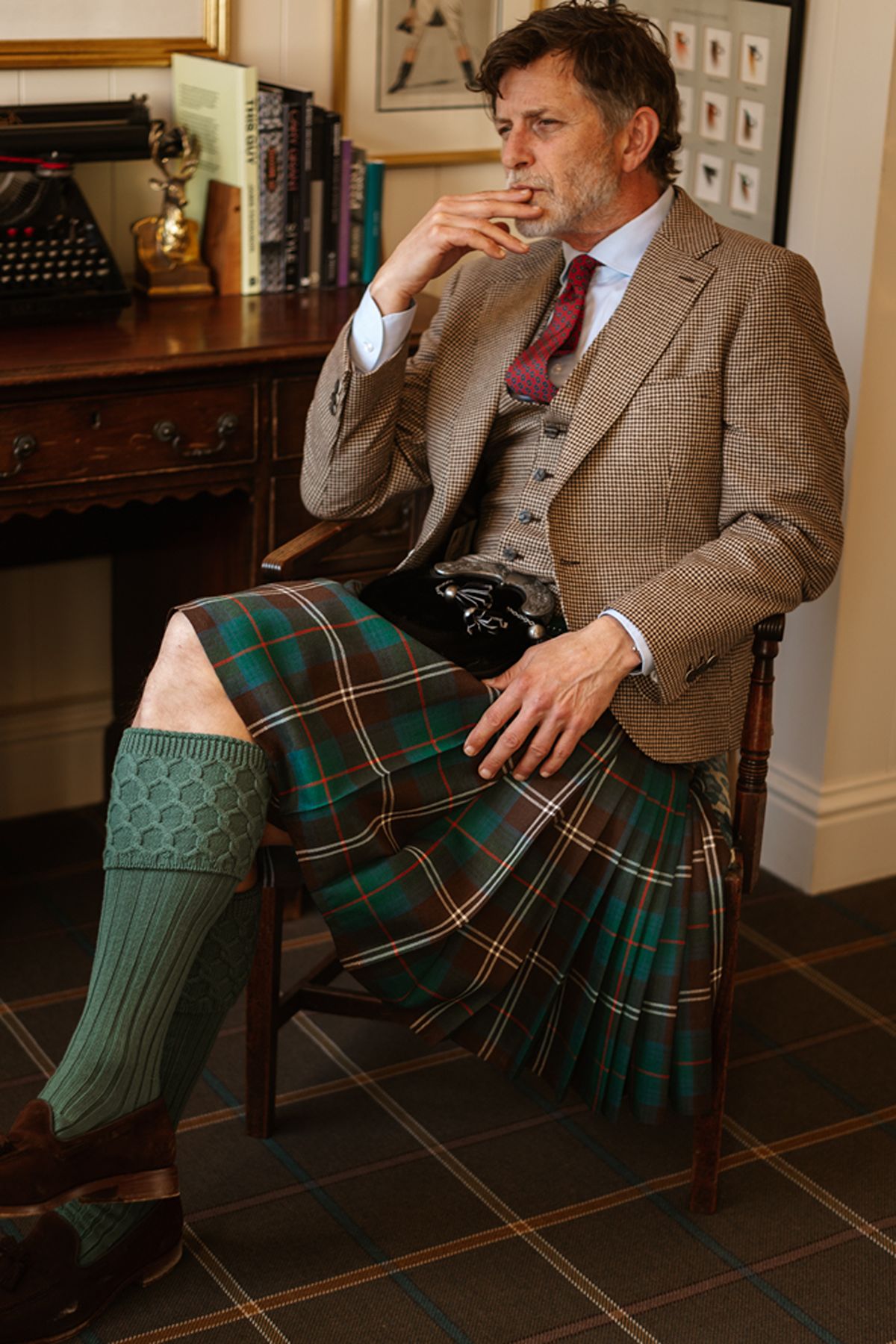
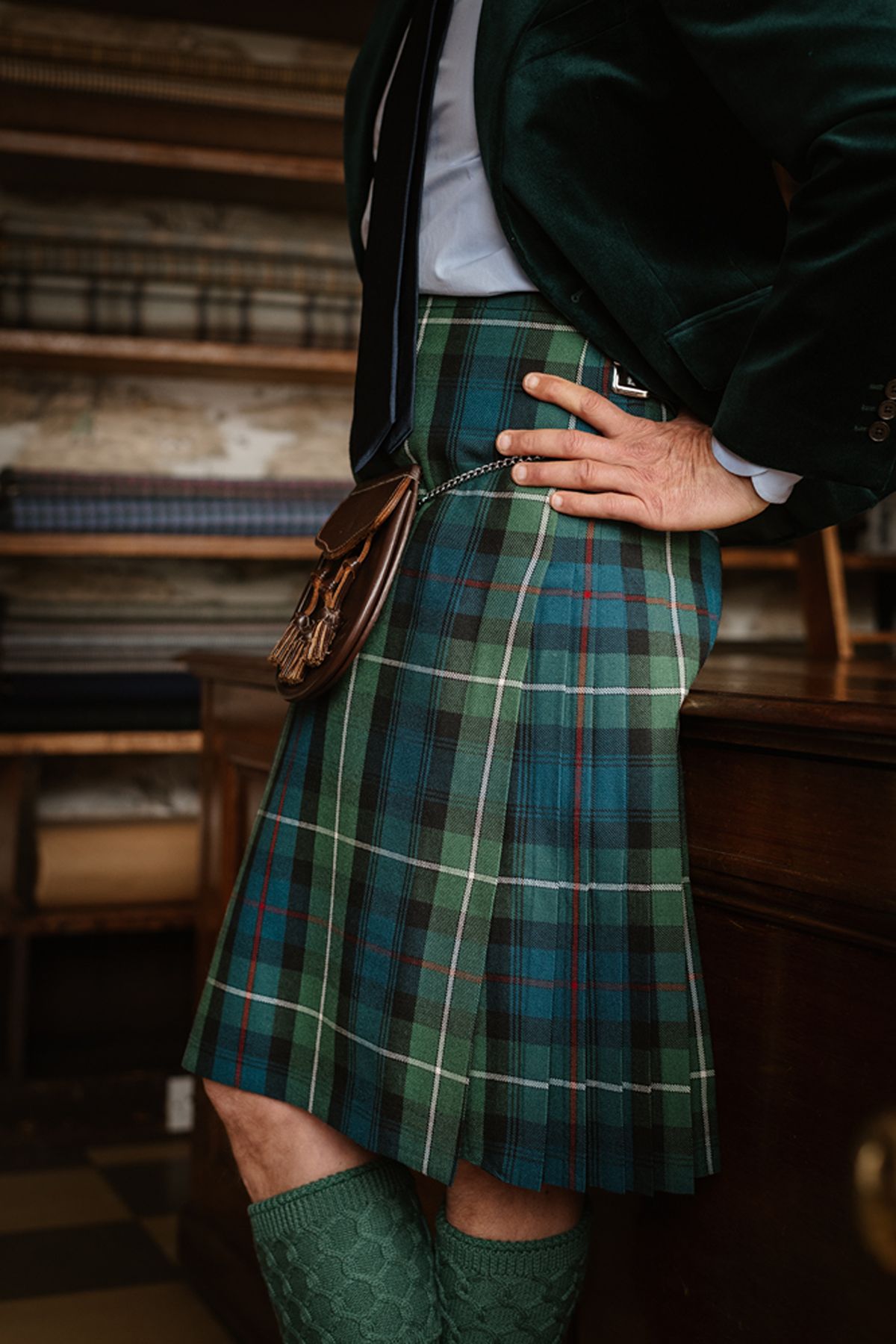
A properly fitted kilt sits high on the natural waist, usually at or just above the belly button, considerably higher than most modern trousers. This is one of the first things we explain to customers commissioning their first kilt, as the position can come as something of a surprise.
The length is traditionally measured to fall around the middle of the kneecap when standing, although individual proportions are taken into account.
The front aprons should lie neatly and flat, while the pleats at the back should fall naturally without pulling or bunching.
A kilt should feel secure without being restrictive, allowing comfortable movement whether standing, walking or sitting.
This is why accurate measurements, taken at the correct height on the waist, are so important.
How Long Does a Bespoke Kilt Take to Make?
A kilt is not something we recommend commissioning at the last minute.
The process involves selecting and sourcing the tartan, taking measurements, arranging the pleats and carefully completing the garment.
Lead times vary depending on cloth availability and our tailoring department's workload, so we recommend allowing plenty of time, particularly for weddings and other fixed occasions.
For wedding parties, it is sensible to begin discussing requirements several months in advance.
What Else Will I Need to Wear with My Kilt?
This depends largely on the occasion.
For formal evening events, a Prince Charlie jacket and waistcoat remain a traditional choice, worn with a dress shirt, bow tie and appropriate Highland accessories.
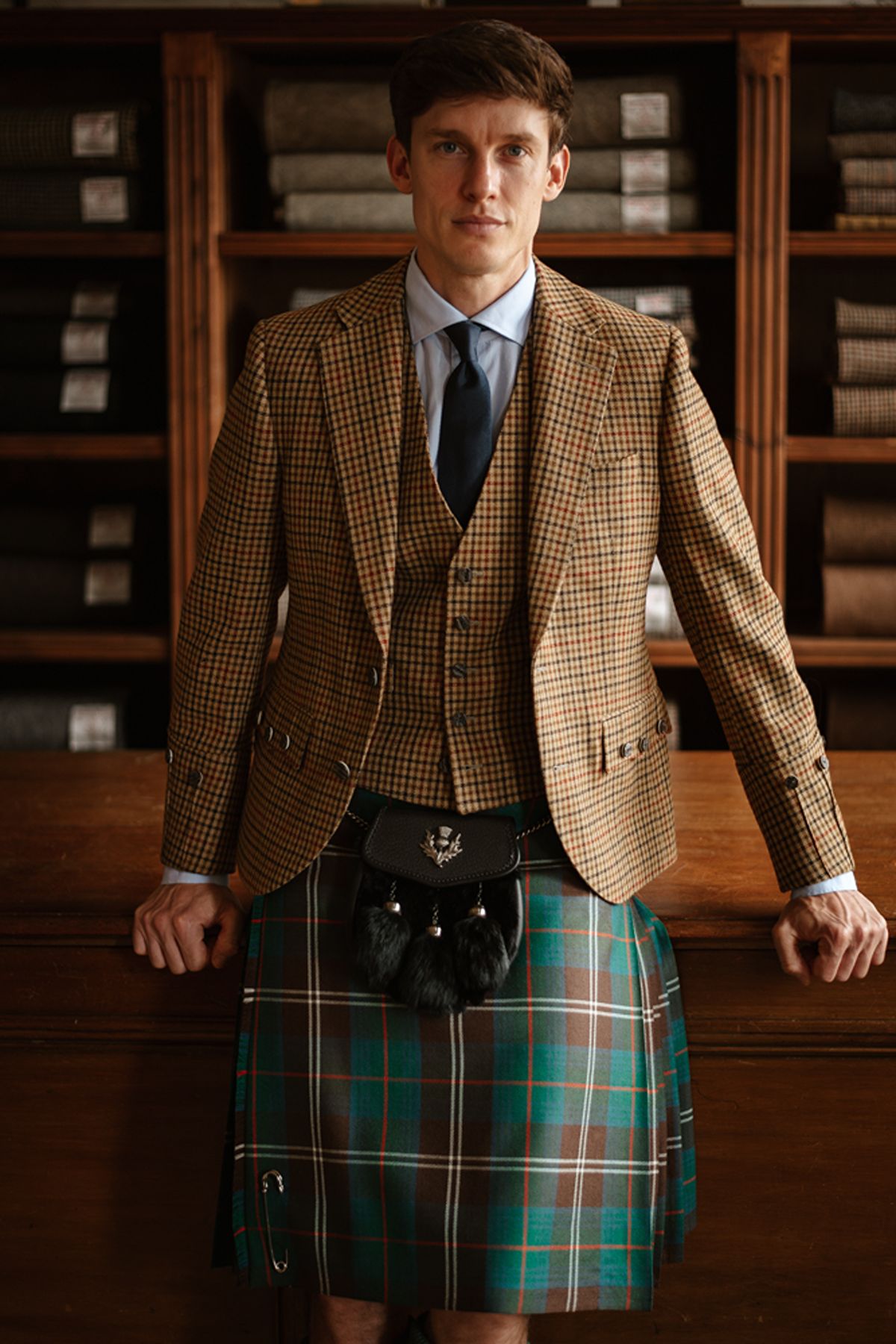
For weddings, daytime celebrations and less formal occasions, an Argyll or traditional tweed kilt jacket can be particularly handsome.
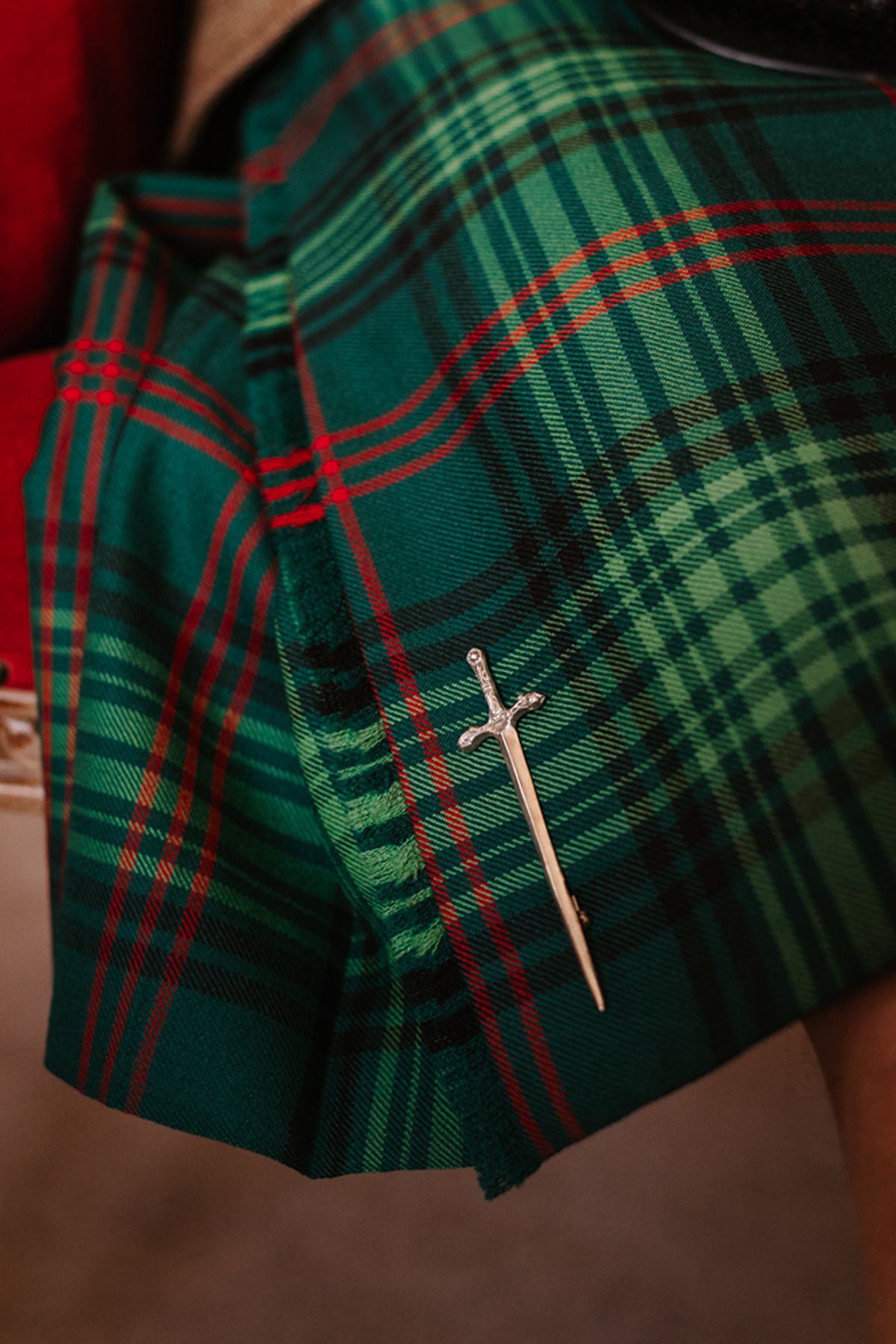
A complete outfit will generally include a sporran, kilt hose, flashes, a kilt pin and suitable footwear.
There is no need to acquire everything at once. Our tailors can advise on which pieces are essential.
Can I Wear My Kilt for More Than Formal Occasions?
Absolutely. Although kilts are frequently associated with weddings and black-tie events, they are by no means restricted to formal dress.
A kilt worn with a tweed jacket, country shirt and knitted tie makes a particularly handsome outfit for daytime occasions.
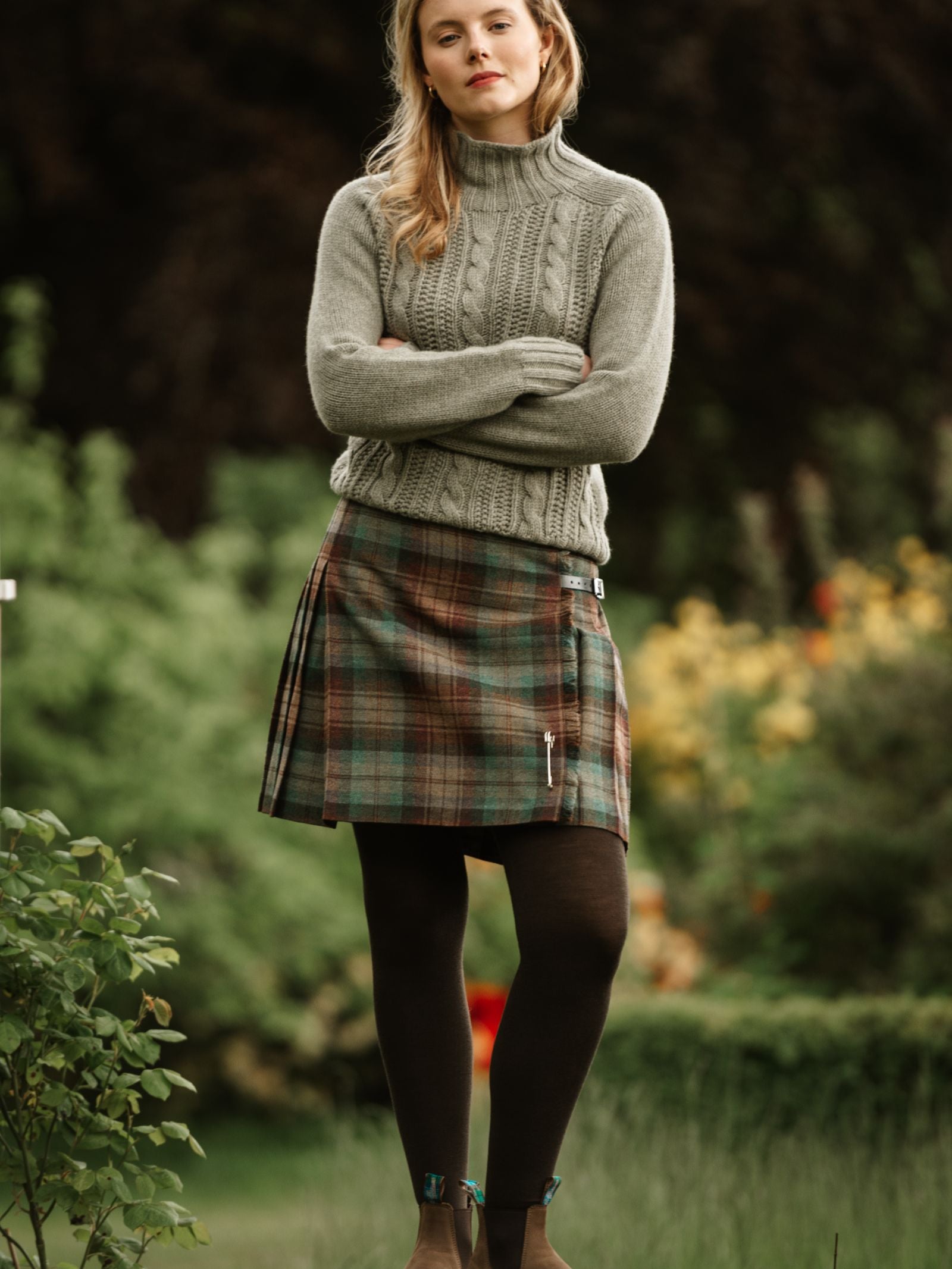
For something more relaxed, a good woollen jumper works equally well.
One of the pleasures of owning your own kilt is finding opportunities to wear it beyond the occasion for which it was originally commissioned.
How Do I Look After My Kilt?
A properly made woollen kilt is remarkably durable, but benefits from careful handling.
After wearing, allow it to air thoroughly before putting it away. Brush off surface dirt and avoid unnecessary cleaning.
When professional cleaning is required, use a specialist familiar with traditional kilts.
Keep the pleats neatly arranged during storage and take precautions against moths.
With sensible care, a good kilt should provide many years of service and may well be passed down through generations.
Why Commission a Kilt Rather Than Buy One Off the Peg?
The principal advantage is that it is made specifically for you.
Everything from the tartan and cloth weight to the length, waist measurement and arrangement of the pleats can be considered individually.
A properly tailored kilt should sit beautifully, move naturally and feel comfortable throughout the day.
There is also considerable satisfaction in owning something made using traditional skills, particularly a garment so closely connected to Scottish history and identity.
Begin Your Commission at Campbell’s
Commissioning a kilt should be a pleasure. From choosing your tartan to finding the right fit, our team in Beauly is here to guide you towards a kilt to enjoy for generations.
Browse our range of tweeds online, or book an appointment ahead of your visit to Beauly for personal advice from our experienced tailoring team.