



The Teba Jacket: What It Is and How To Wear It
From the shooting estates of Spain to the Scottish Highlands, the Teba jacket is a wonderfully understated piece of country clothing, combining the comfort of knitwear with the appearance of traditional tailoring.
There are certain garments that seem to have been designed with little regard for fashion, yet somehow remain as relevant today as when they first appeared. The Teba jacket is one of them.
Neither quite a sports jacket nor a cardigan, the Teba occupies a rather appealing middle ground. Its soft, unstructured construction makes it wonderfully comfortable, while its distinctive collar, buttoned front and relaxed tailoring give it a character entirely its own.
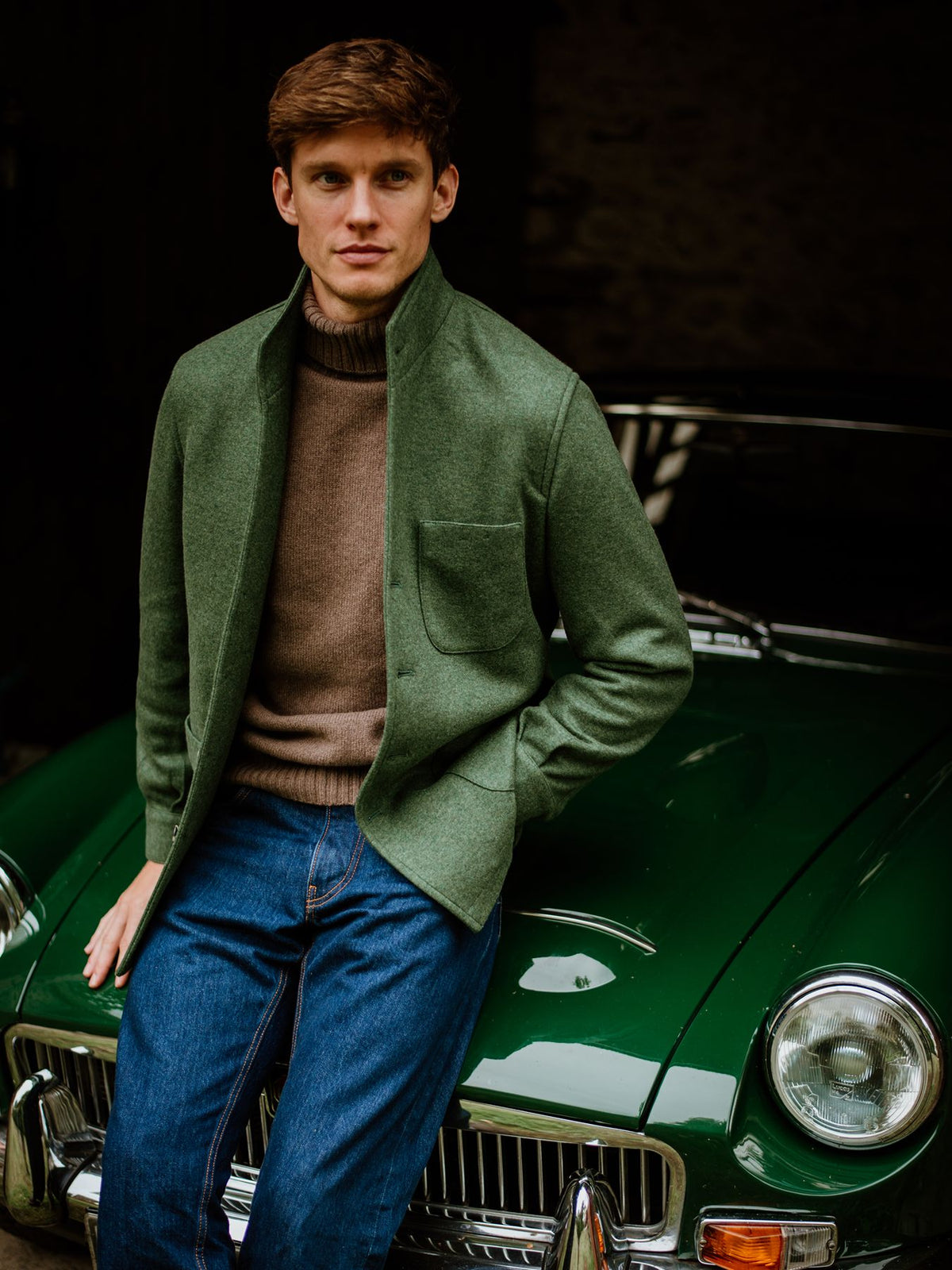
At Campbell’s, we have long been admirers of the Teba, and our much-loved Gents Teba Jacket has recently returned to stock in beautifully soft loden cloth, available in three traditional colours: green, brown and navy.
A Spanish Sporting Tradition
The history of the Teba jacket is closely intertwined with Spanish aristocracy, country pursuits and the sporting traditions of the early twentieth century.
Its origins are not entirely clear, and several accounts exist of how the jacket first came about. One of the best-known stories links its development to King Alfonso XIII of Spain, a keen sportsman who is said to have worn a particularly comfortable shooting jacket, possibly made by a Savile Row tailor.
According to this account, the King introduced the style to his friend the Count of Teba, who recognised its practical advantages for shooting. The Count subsequently became so closely associated with the garment that it eventually took his name.
Another account places the jacket's early development in Zarautz, a coastal town in the Basque Country of northern Spain, where a local tailor is said to have helped establish its distinctive design.
Whatever its precise beginnings, the Teba became firmly established in Spanish sporting circles during the first half of the twentieth century.
An interesting chapter in its history comes from the Barcelona tailoring house Bel y Cia, which records that in 1943 the Count of Teba and two fellow shooting enthusiasts commissioned the firm to reproduce a favourite sporting jacket. This association helped establish the style that would become known as the Teba.
At a time when sporting clothing was often considerably more formal than it is today, the appeal of a softer, less restrictive jacket was obvious. A gentleman required something smart enough to wear amongst his fellow sportsmen, but practical enough to allow freedom of movement when shooting.
The Teba answered that need.
Its soft shoulders, relaxed construction and distinctive collar made it particularly well suited to days in the field. Over time, it became a familiar part of the Spanish country wardrobe, associated with an understated style of dressing that placed comfort and practicality above unnecessary formality.
What Makes a Teba Jacket Different?
The charm of the Teba lies in its simplicity.
Unlike a conventional tailored jacket, it has very little internal structure. The shoulders sit naturally, the cloth moves comfortably with the wearer, and the overall appearance is considerably more relaxed than that of a traditional blazer.
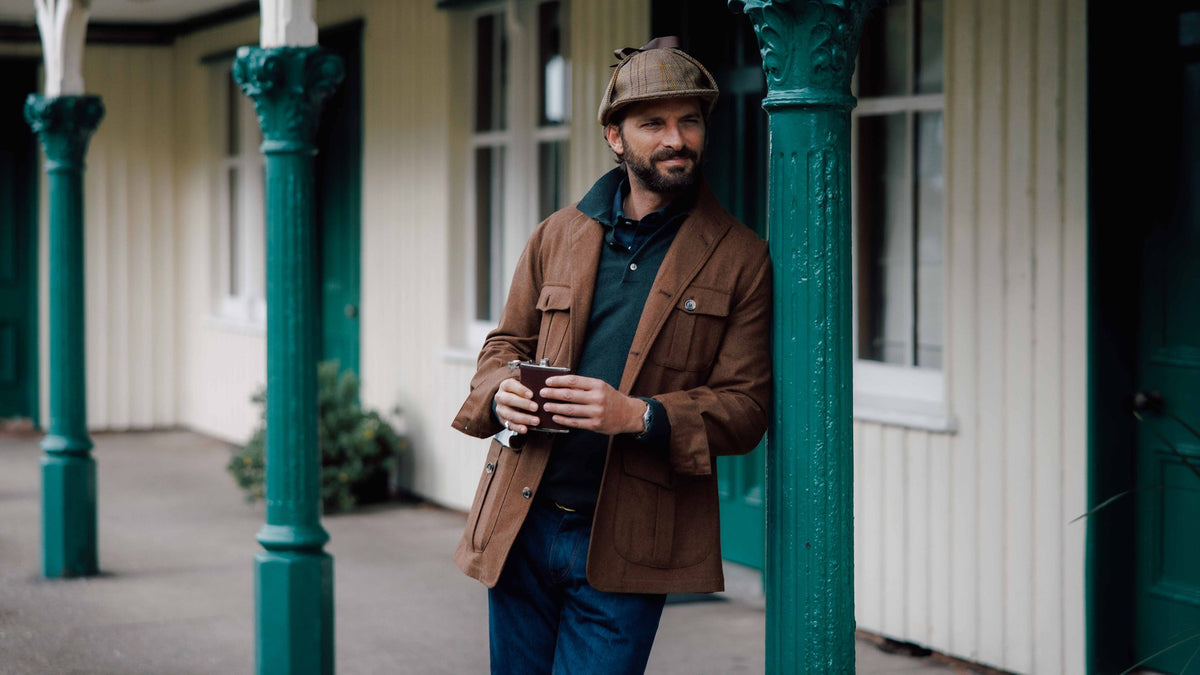
Its distinctive collar can be worn open for an informal appearance or buttoned higher when the weather turns. The front and pockets retain the familiar details of a jacket, while the soft construction makes it almost as comfortable as a favourite piece of knitwear.
Our own Teba is made from loden, a traditional woollen cloth with a soft handle and considerable substance. Long associated with European country clothing, particularly in the Alpine regions, loden is wonderfully suited to the Teba's relaxed construction, providing warmth and durability without the stiffness of more formal tailoring.
How to Wear a Teba Jacket
One of the great advantages of the Teba is its versatility.
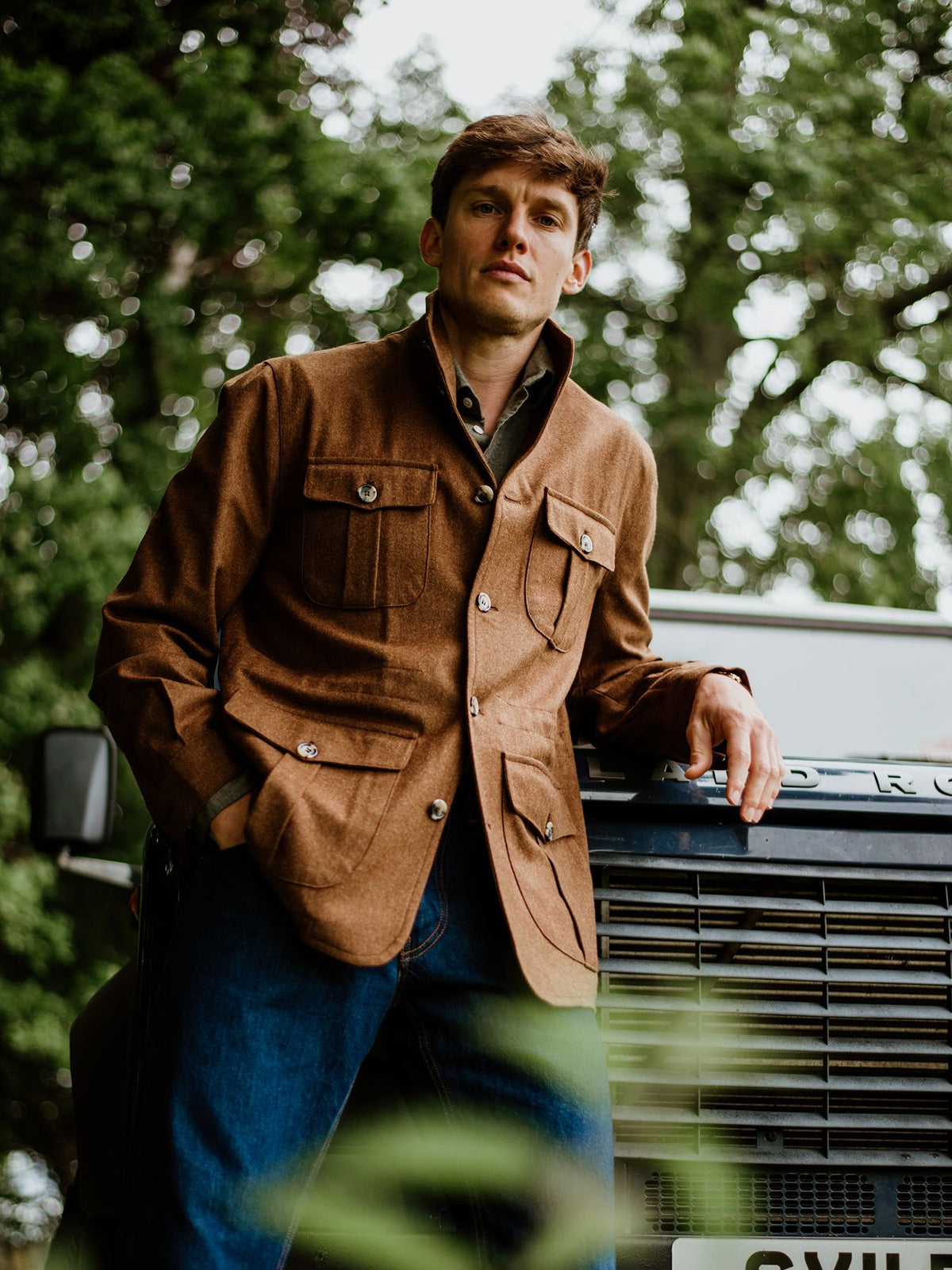
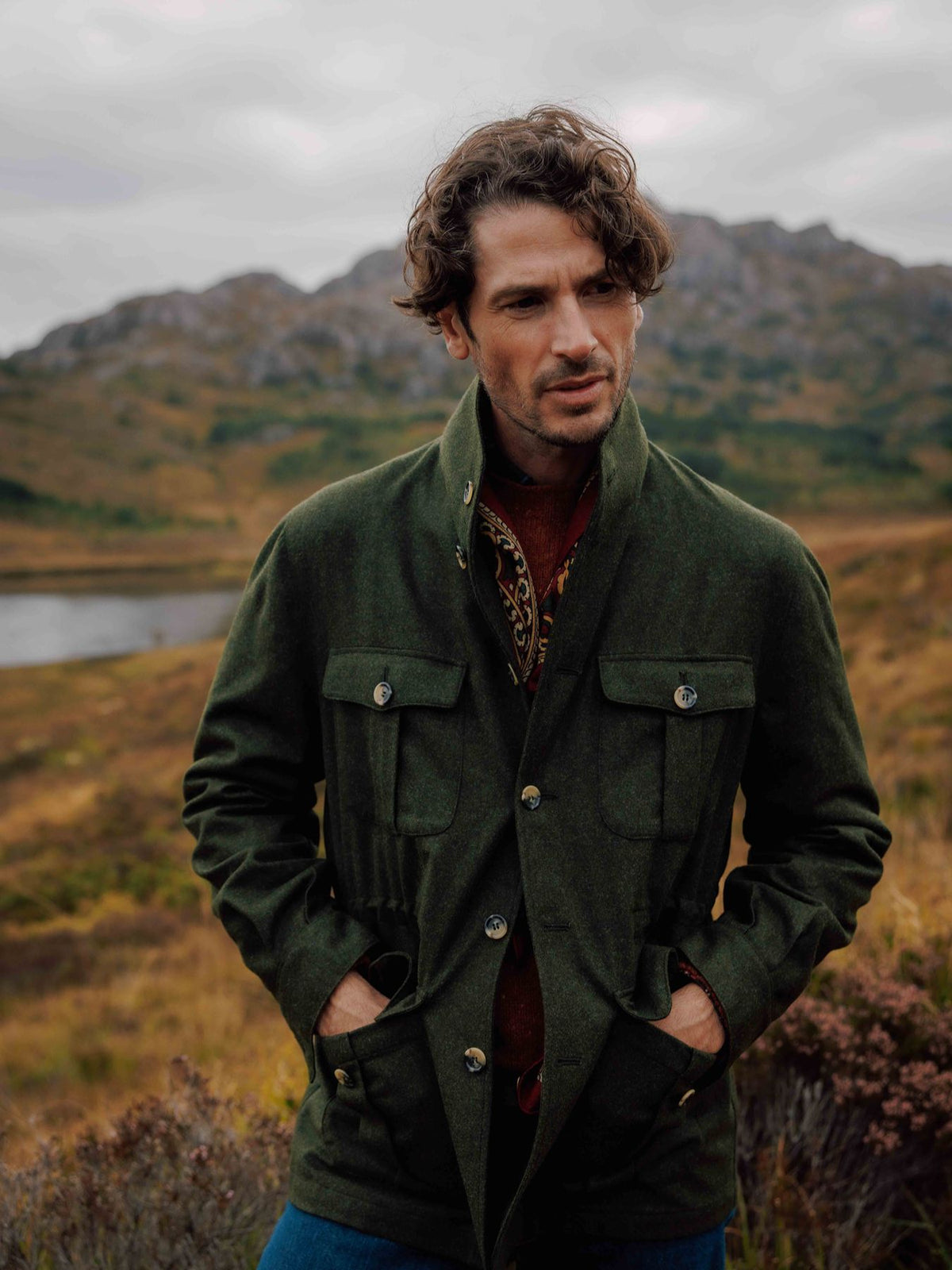
For country wear, the green or brown versions look particularly good with cavalry twill trousers, corduroys or traditional moleskins. Add a checked shirt, wool tie and sturdy country shoes, and you have a combination that feels entirely appropriate for a weekend in the Highlands.
For something less formal, wear it over a Shetland sweater or fine-gauge knit with denim and suede shoes. The soft construction lends itself particularly well to layering, without the rather rigid appearance of a conventional sports jacket.
The navy Teba is perhaps the easiest of the three to wear in town. Paired with grey flannels, a shirt and knitted tie, it offers a relaxed alternative to a blazer, smart without appearing overly dressed.
And that, really, is the beauty of the Teba. It does not demand a particular occasion or an elaborate wardrobe. It simply works.
A Welcome Return
There is something particularly satisfying about a garment whose design has changed remarkably little over the generations.
The Teba was conceived as practical sporting clothing, yet its appeal extends far beyond the shooting field. Its combination of soft tailoring, natural wool cloth and restrained styling makes it just as useful today as it was in the Spanish countryside generations ago.
A little Spanish sporting heritage, a good woollen cloth and a jacket that deserves a permanent place in the wardrobe.


