



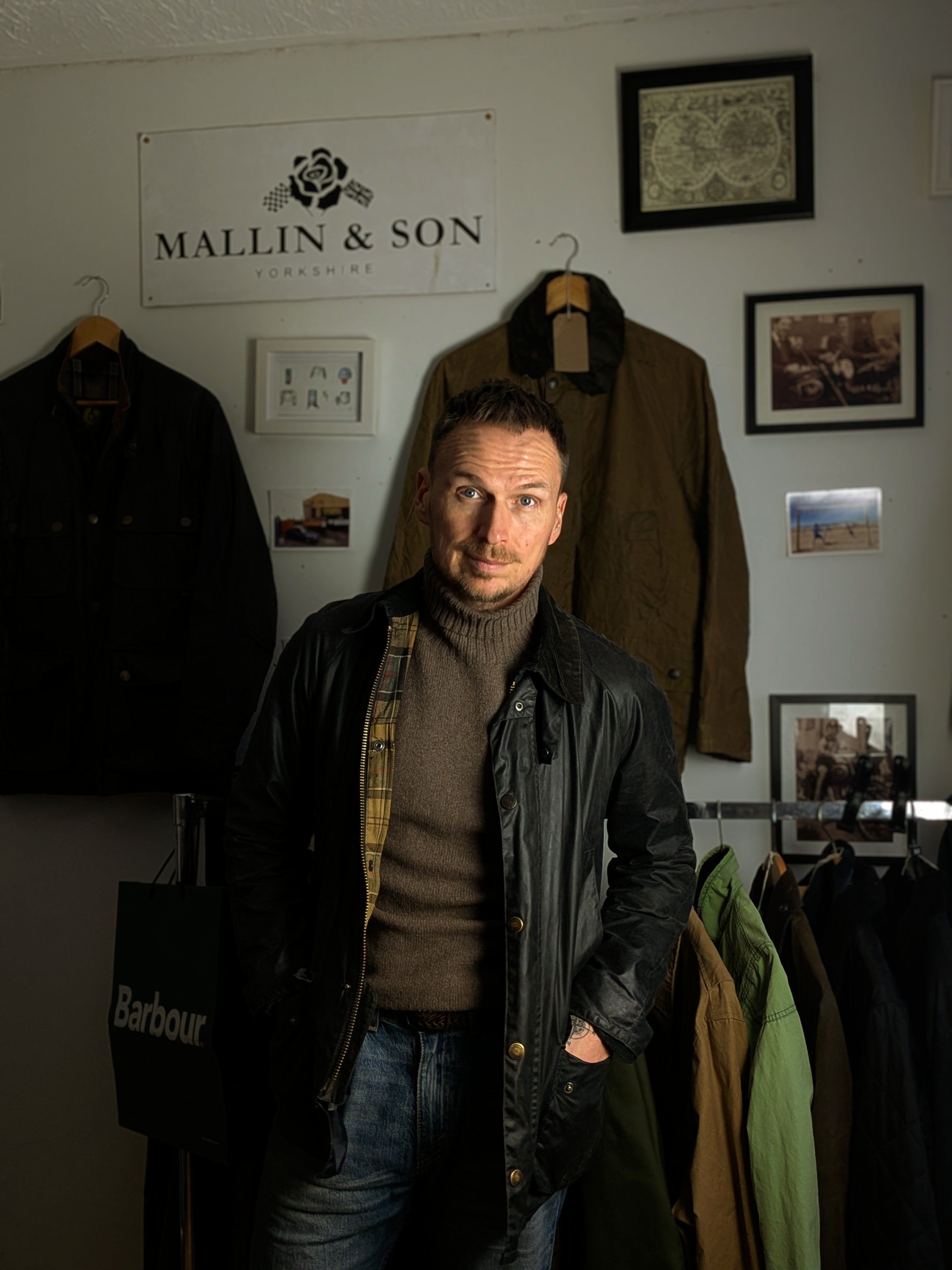
Mallin & Son
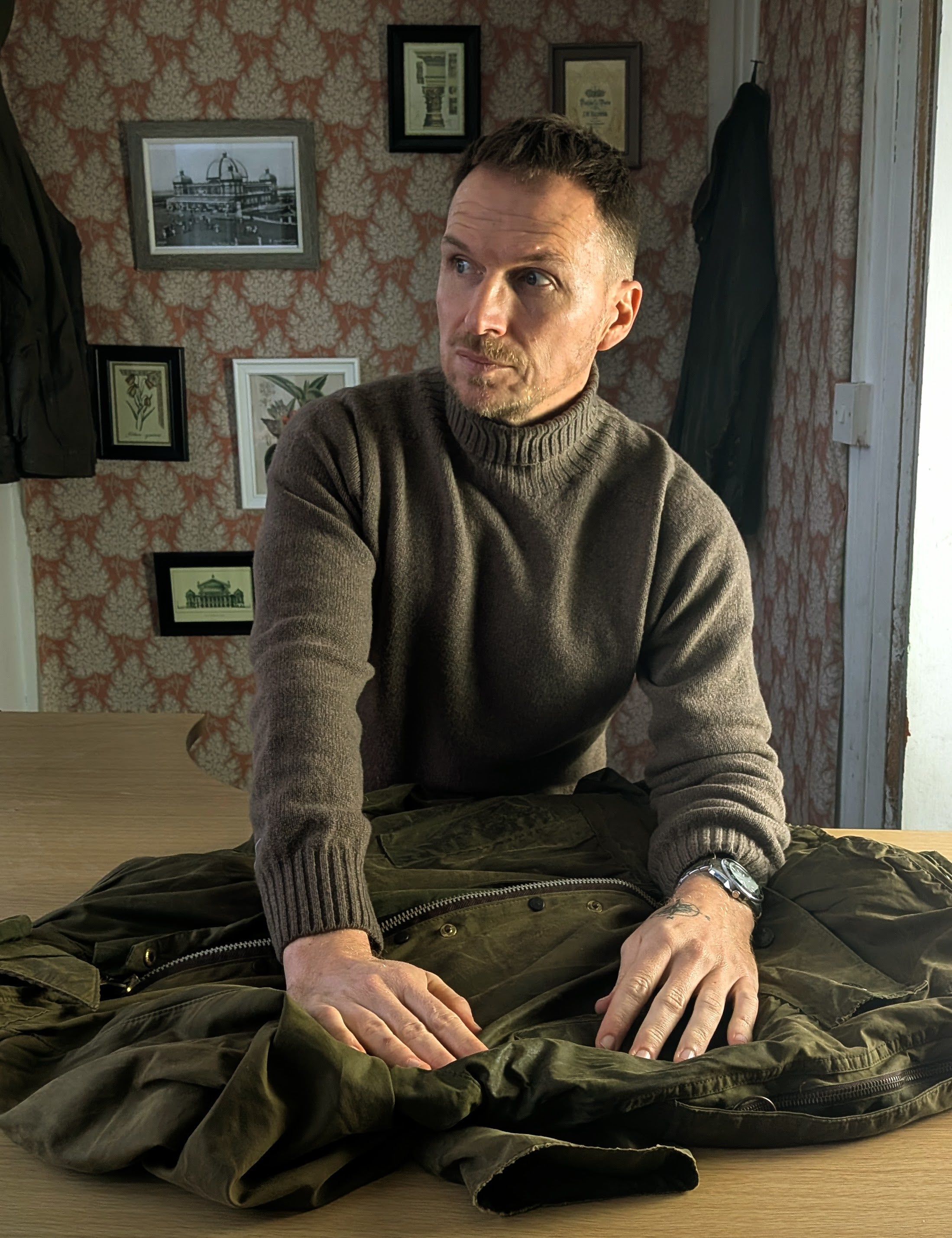
We caught up with Ryan of Mallin & Son, a Campbell’s customer in Wakefield, whose craft in wax jacket restoration reflects our shared belief in repairing rather than replacing.
Welcome to Campbell’s Clientele, a series celebrating the people who inspire us. Friends of the brand who live, work and explore with the same love for craftsmanship, tradition and community that we hold dear. Discover all stories here.
What first drew you to working with waxed jackets? Was there a moment that inspired you?
It all started by accident. I picked up an old Barbour Gamefair on eBay and when it arrived it was unbelievably dry. After a bit of research I realised you could re-wax at home, so I bought some wax and had a go at the kitchen table. The first attempt was an absolute disaster, but nearly seven years later something clearly made me persist. I’d love to say it was a calling, but in reality it was probably my Yorkshire roots not wanting to waste money.
What’s your background before launching Mallin & Son? Have you always been hands on?
Never. I’m actually pretty useless when it comes to DIY, but creatively I’ve always leaned towards art and music. That’s very much how I approach repair work too, I like to show the workings and leave things a little rough around the edges rather than overly polished. My professional background is in digital services and User Centred Design, which ended up being pivotal when building a business around such a niche idea.
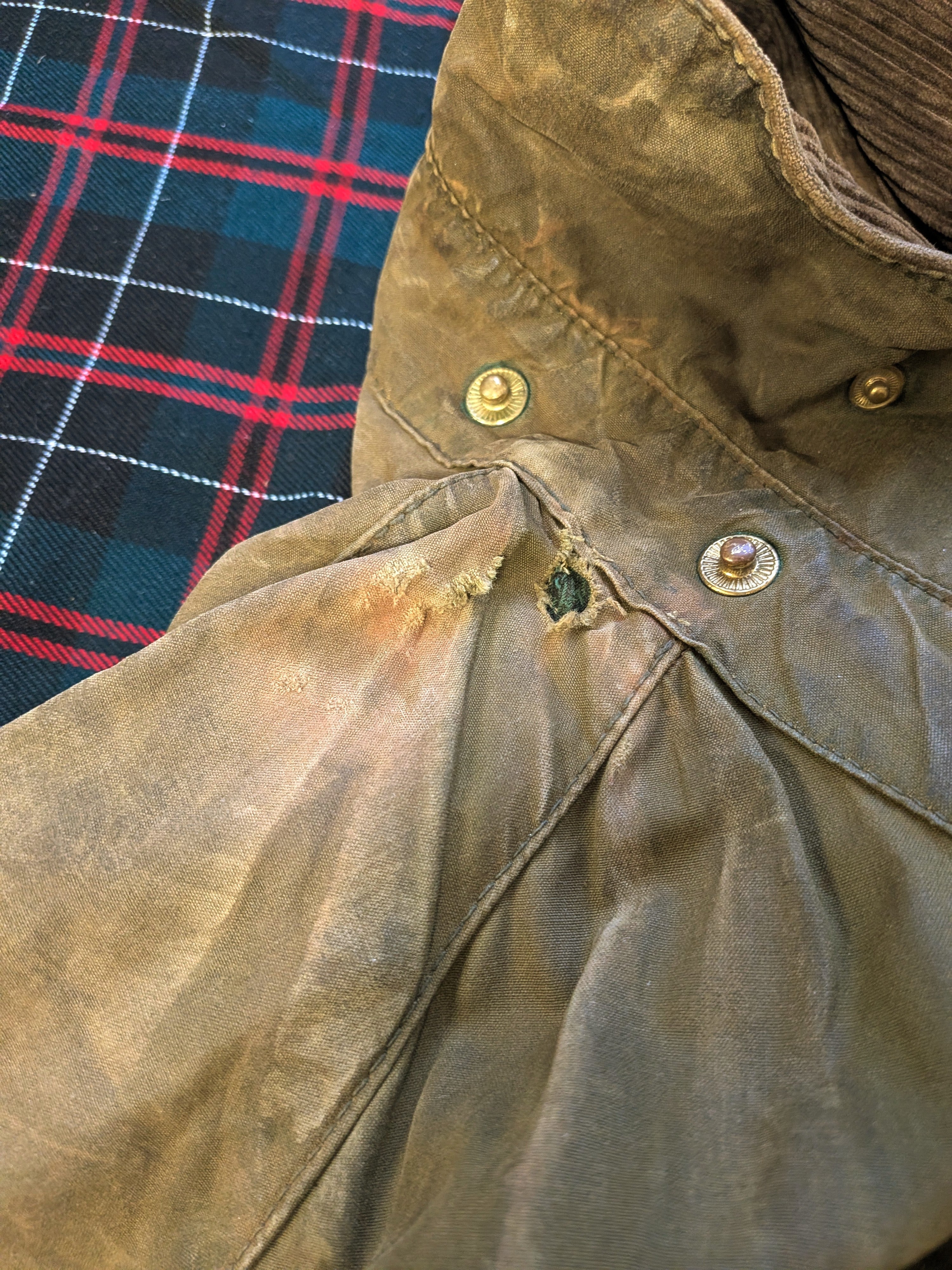
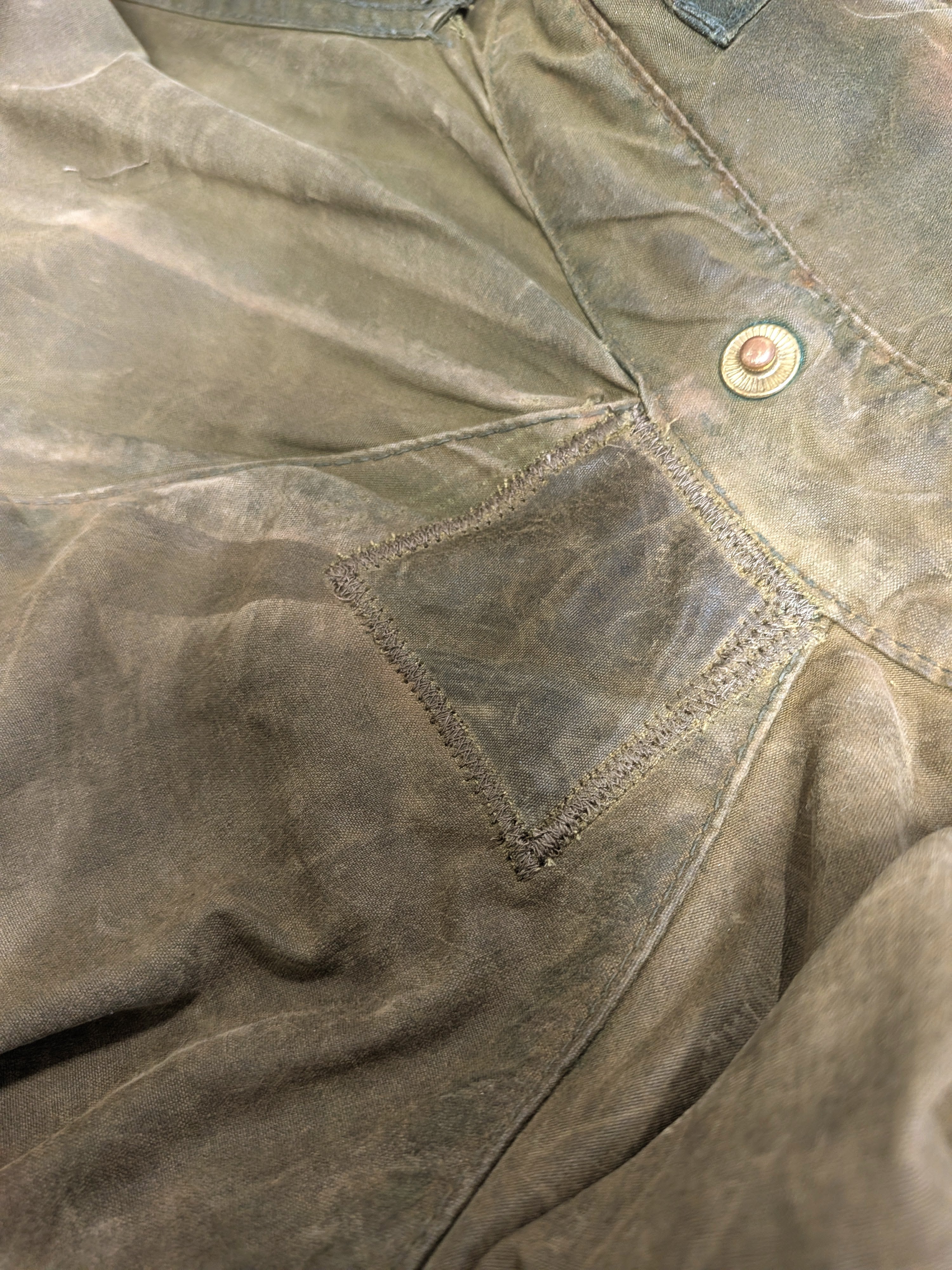
Why do you think people form such emotional attachments to their old jackets?
This is one of the nicest parts of the job. Customers often email or call in to talk through the work, and quite often the jackets have been passed down from family members who are no longer around. They’ll tell me how wearing them helps them feel close. It all comes down to stories and memories. Every stitch or patch marks something, an event, a place, or even just a walk in the woods. Because they’re so robust, these jackets stick around for decades and become part of the furniture of people’s lives. Our job is simply to help prolong that.
What’s the most satisfying transformation you’ve ever worked on?
As a business we’ve done some great work, but my most satisfying job will always be my first repair. After our seamstress retired I couldn’t replace her, despite trying colleges and ads, so I booked myself onto a sewing course. Three hours later I’d gone from being scared to thread the machine to running our repairs department. The first repair was tiny and nondescript, but the confidence it gave me was huge, especially when the customer didn’t come back to say I’d ruined their jacket.
How do you balance traditional craftsmanship with modern customer expectations?
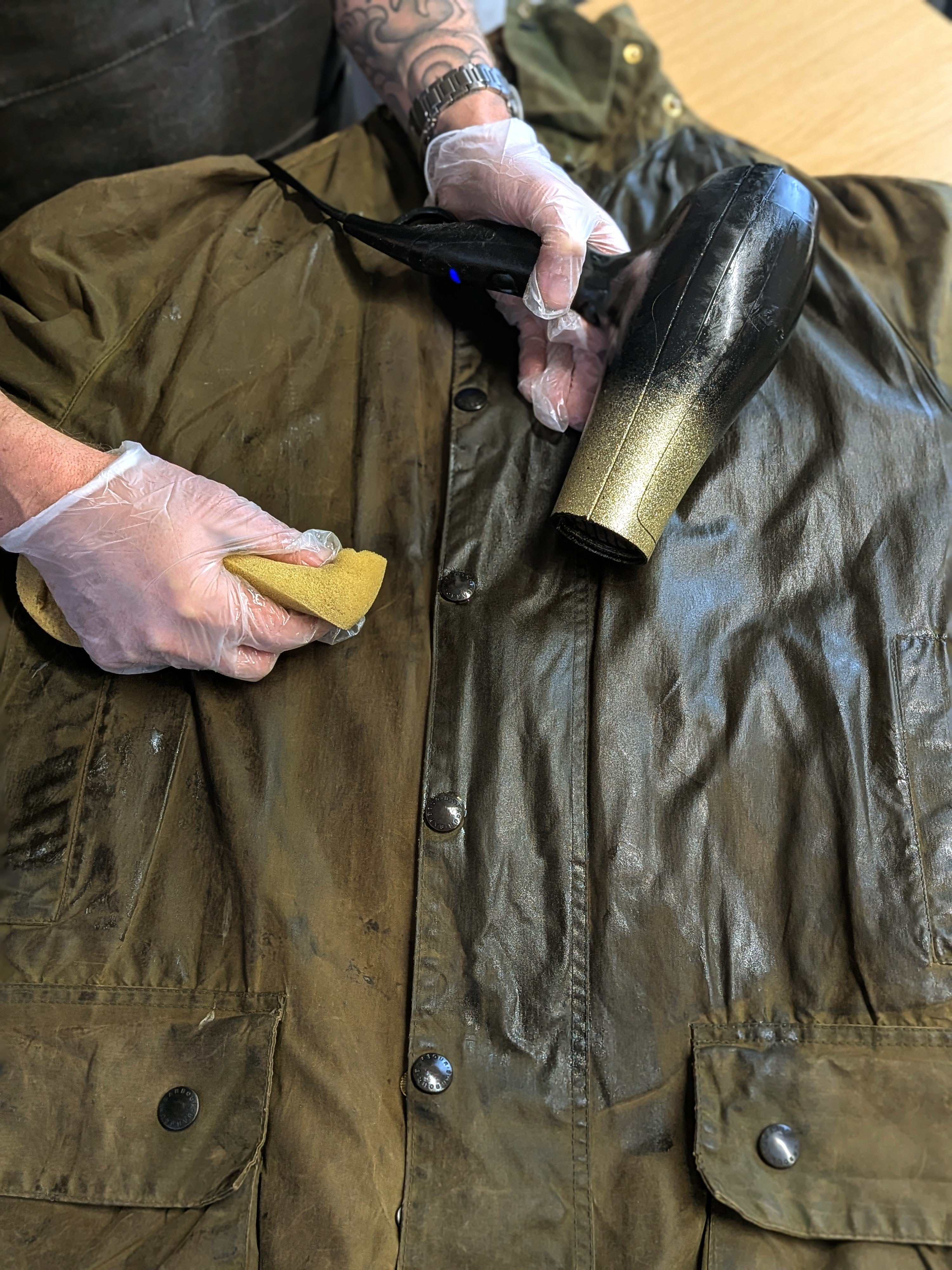
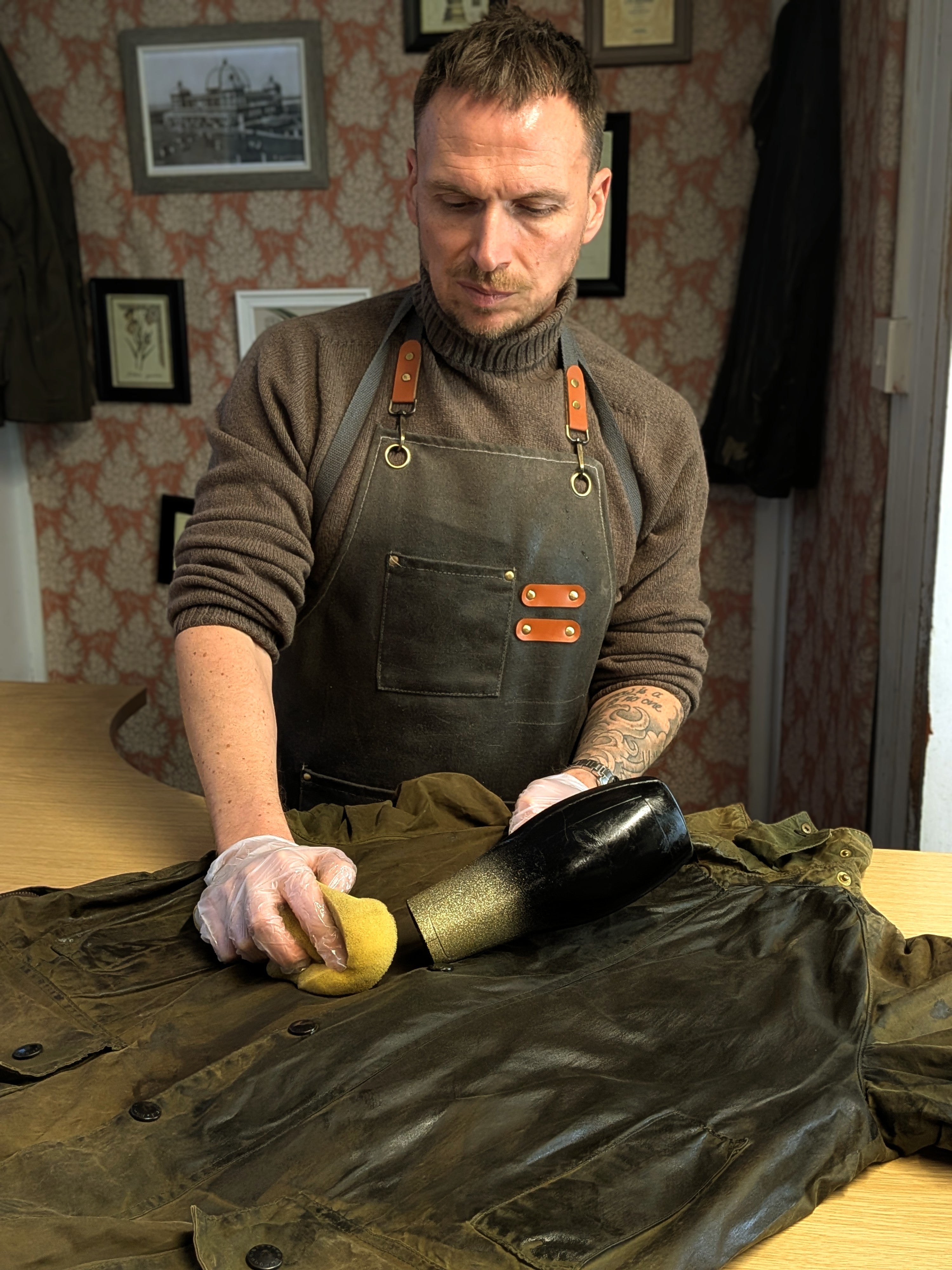
One of the main drivers when I started was bringing back something personal, what I call service with a handshake. Everything had become quite faceless, which only intensified during Covid. We work hard to turn jackets around quickly, but the process is never rushed. Each jacket is fully waxed, wiped down, hung overnight, and checked again before being sent home. Our turnaround is usually around seven days, which we feel is more than reasonable. Like most things of value, it’s worth the wait.
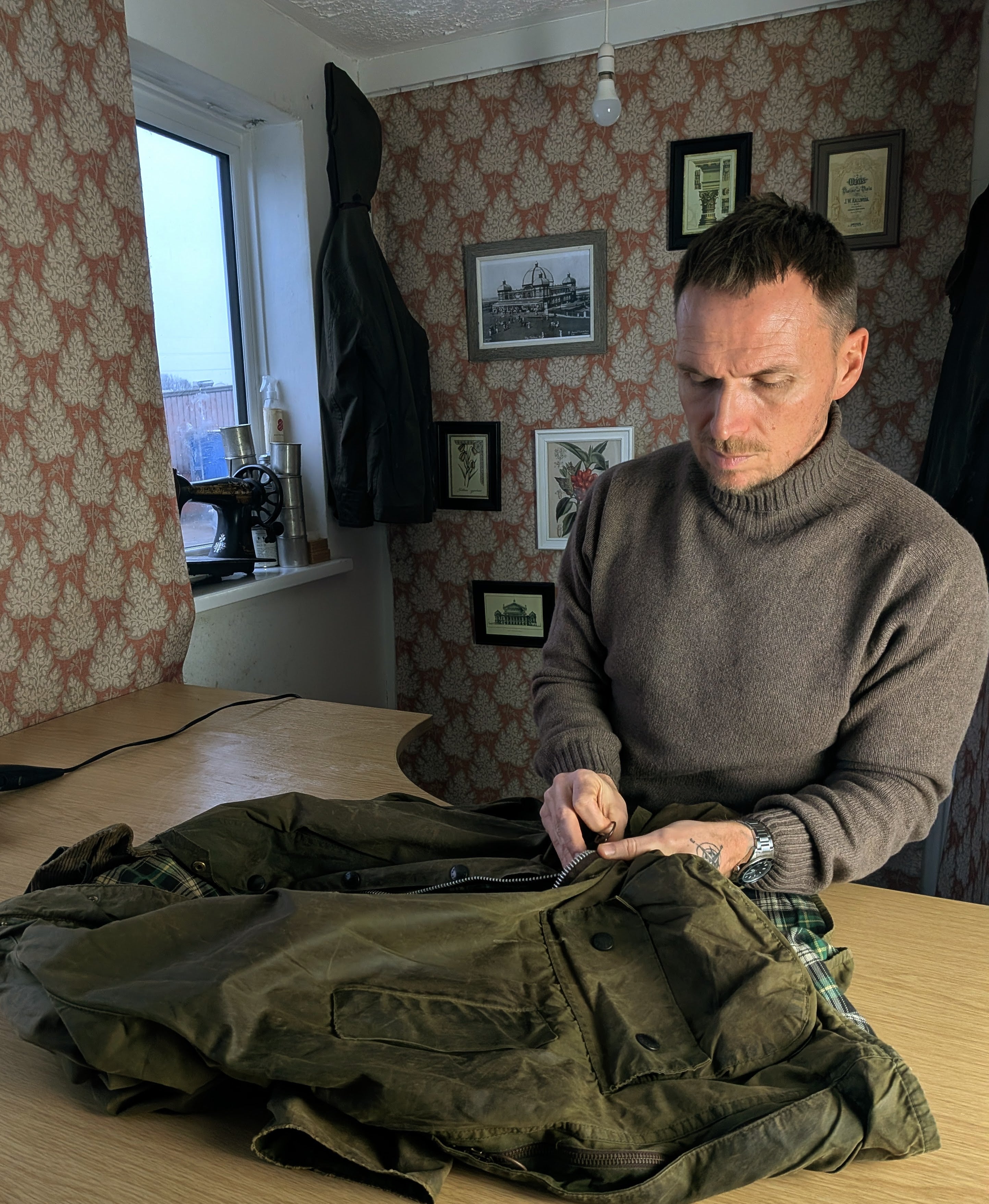
What advice would you give to someone trying to maintain their waxed jacket at home?
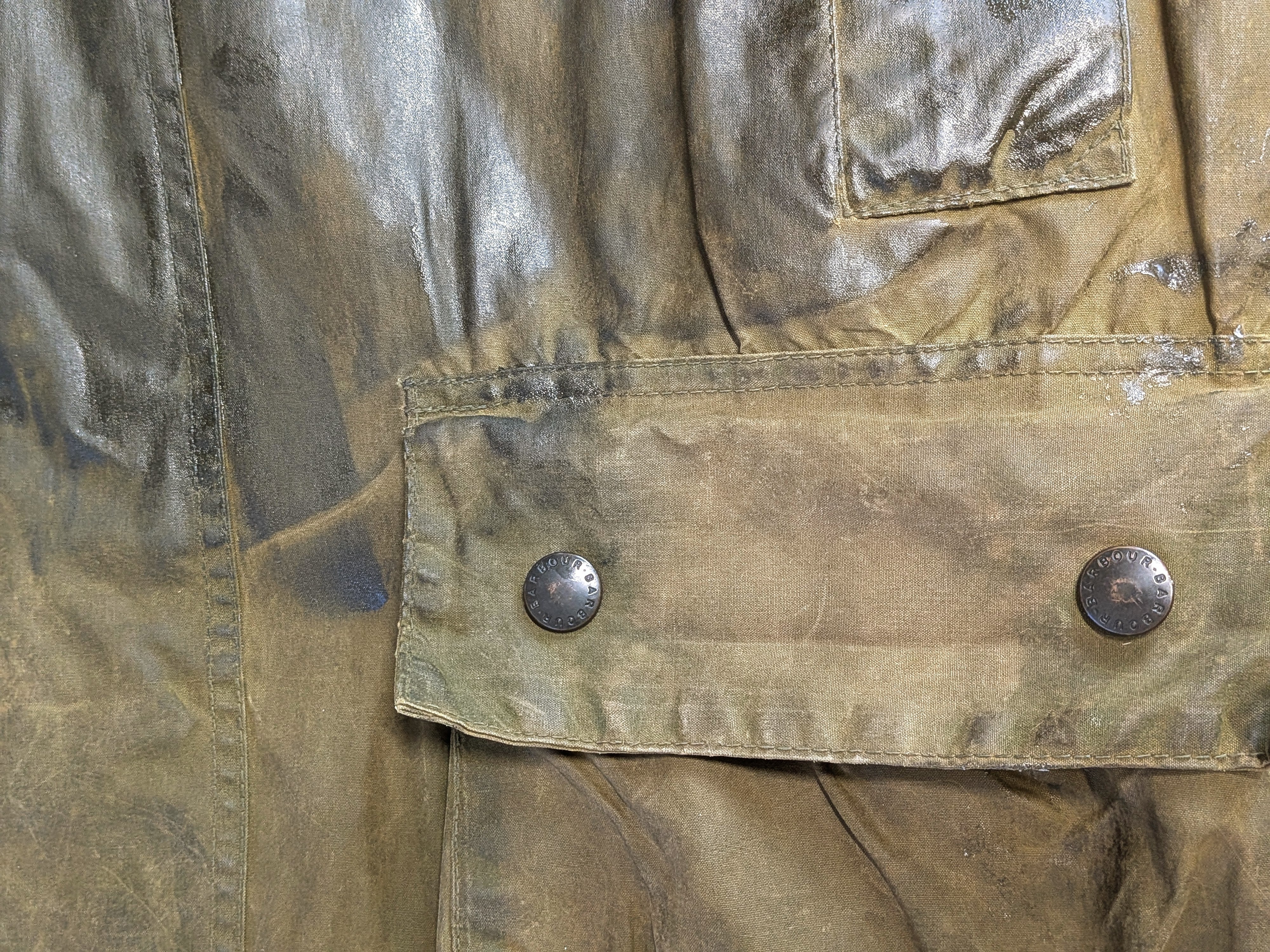
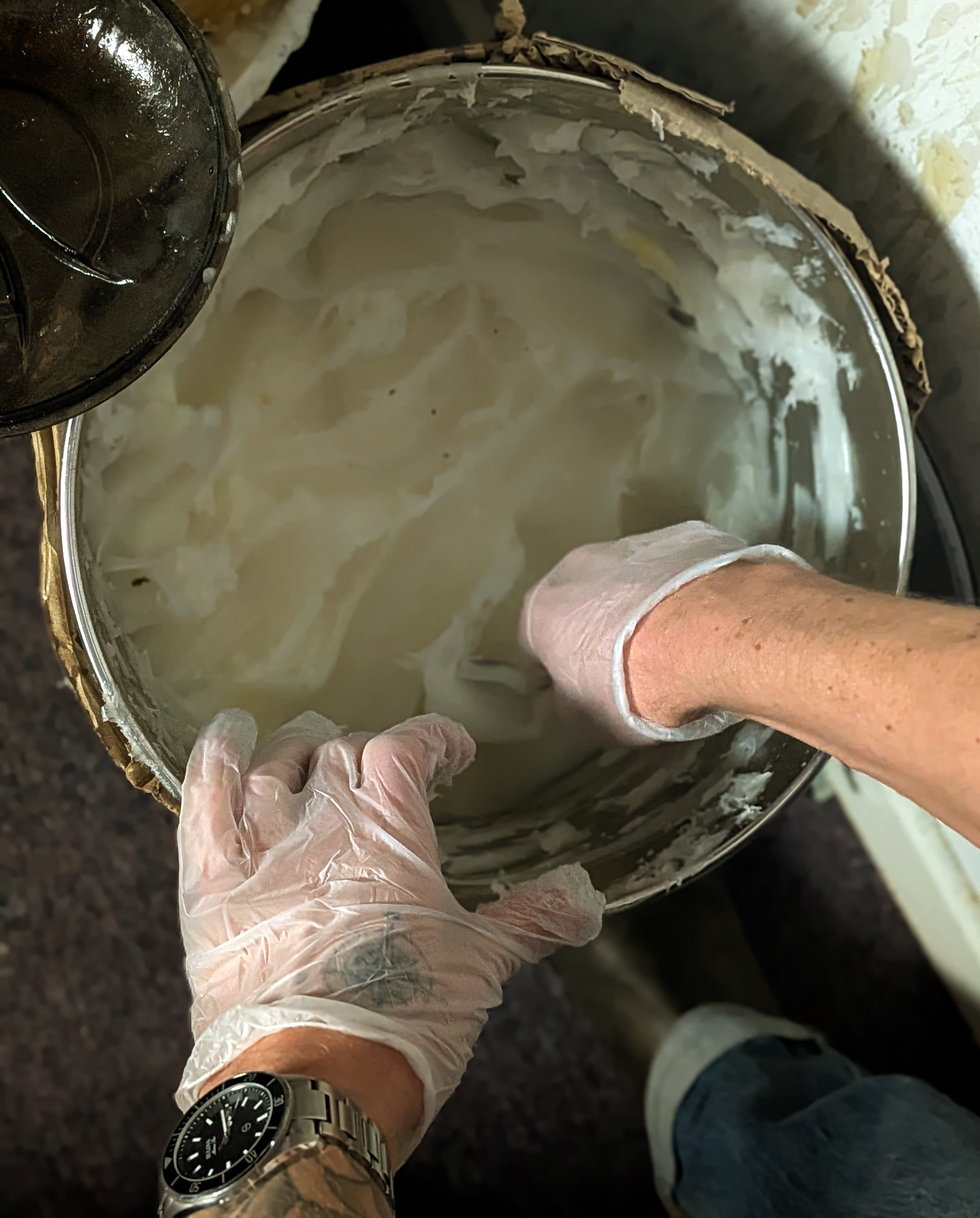
Preparation is key. Set up a proper workspace away from anything that doesn’t get on with wax. After that it’s all about temperature and restraint. Knowing how much wax to apply comes with experience, but the golden rule is you’ll need far less than you think.
Do you have a favourite brand or era of jacket you love working on?
Barbour jackets from the 80s and early 90s are probably my favourites, especially the Solway. They’re true workhorses made for pure utility rather than fashion. I also have a soft spot for mid-50s Belstaff Trialmasters. The fabric is bulletproof and they were designed to protect riders rather than make a statement. Having owned so many over the years, I’ve only recently started properly collecting and building a small archive of jackets from different eras.
When did you first discover Campbell’s, and how do you see our craftsmanship aligning with yours?
I wouldn’t call it alignment so much as aspiration. Campbell’s was one of the brands I looked to when thinking about how to make our service feel aspirational without being artificial. The aesthetic is honest and rooted in utility, creating things to be used for the purpose they were made. Our role is to help preserve and prolong stories like that.
What’s the biggest challenge in repairing something that’s been loved and worn for decades?
There’s definitely a sense of responsibility, but it’s also exciting. These jackets are meant to work hard, and customers want repairs that look strong and reassuring. Over time I’ve developed my own style, which people now expect or specifically ask for. Once I get past the imposter syndrome, it’s incredibly flattering.
What’s the most rewarding part of giving an old jacket a second life?
Saving a jacket from being thrown away is hugely satisfying. The thank you emails still catch me off guard and really make me stop and reflect on the work we’re doing. There’s also a quiet pride in pushing back against fast fashion. You can buy a brilliant second-hand wax or wool jacket for very little money, and if it’s looked after properly it will give you a lifetime of service.
Shop The Look